
On this page
What pay per click is
In search, that means ads on Google or Bing that appear when people search for keywords you bid on. You set a budget and a bid strategy, the search engine runs an auction each time a matching search happens, and your ad appears if it wins.
It is the most measurable kind of advertising there is: you can see the exact search, the cost of the click and, with tracking in place, whether that click became a customer.
That precision is also what makes a badly run account so expensive, because every wasted click is billed.
What decides what you pay
The search engine doesn’t simply sell the top spot to the highest bidder. It weighs your bid against how likely your ad is to be clicked, how relevant it is to the search, and the experience of the page it leads to. An advertiser with a closely matched ad and a fast, relevant page can outrank a higher bidder and pay less.
So the levers are:
How to check it yourself
- Sort search terms by cost.
In Google Ads, open the search terms report for the last 30 days and sort by cost. The expensive searches with no conversions are your first negatives.
- Test each landing page on a phone.
Then check each landing page on a phone over mobile data, and run it through PageSpeed Insights.
- Check the final URL.
Make sure the ad's final URL lands directly on the page, with no redirect hop.
Before and after: a final URL that redirects
Example for illustration; not a client's data.
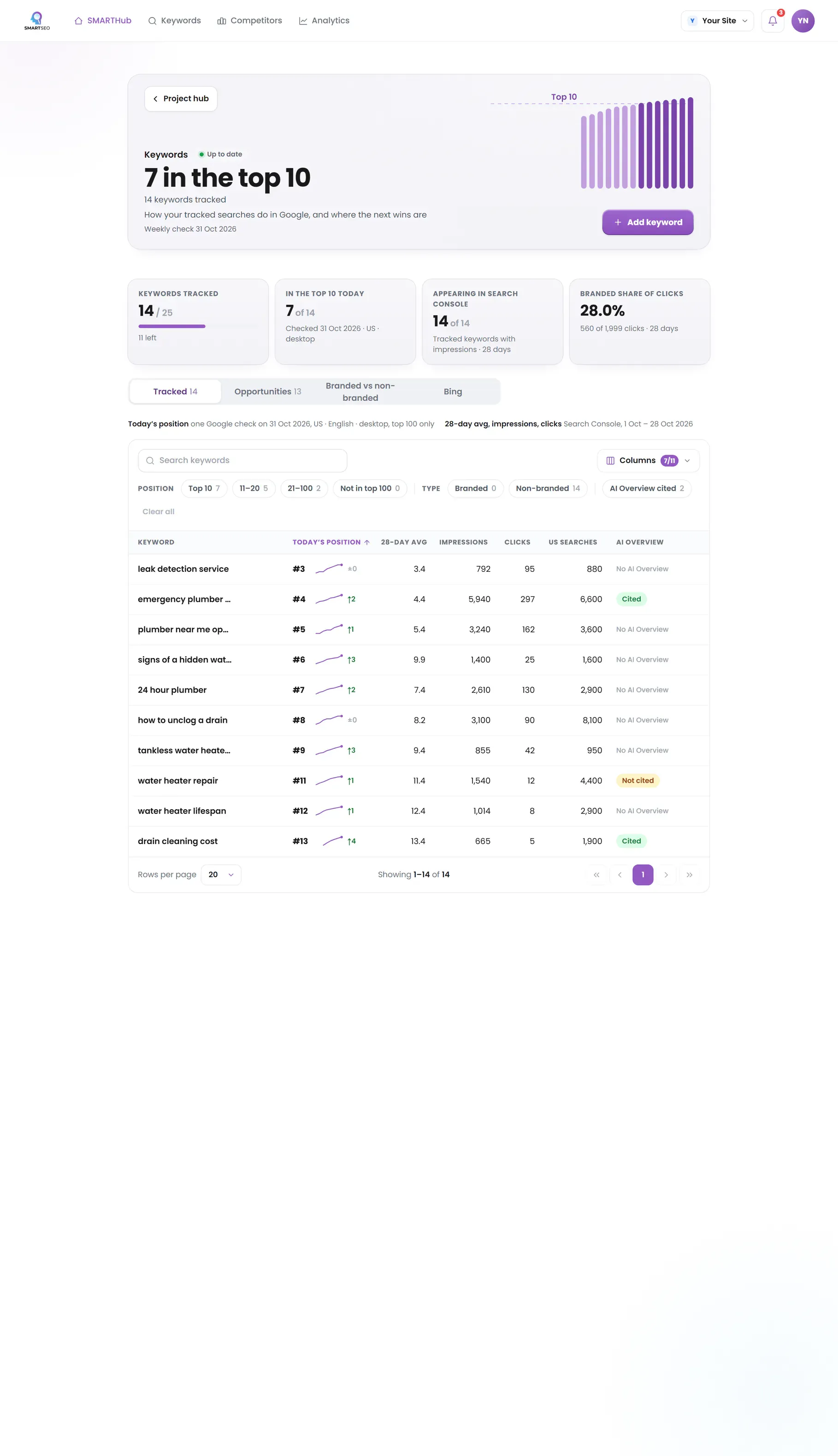
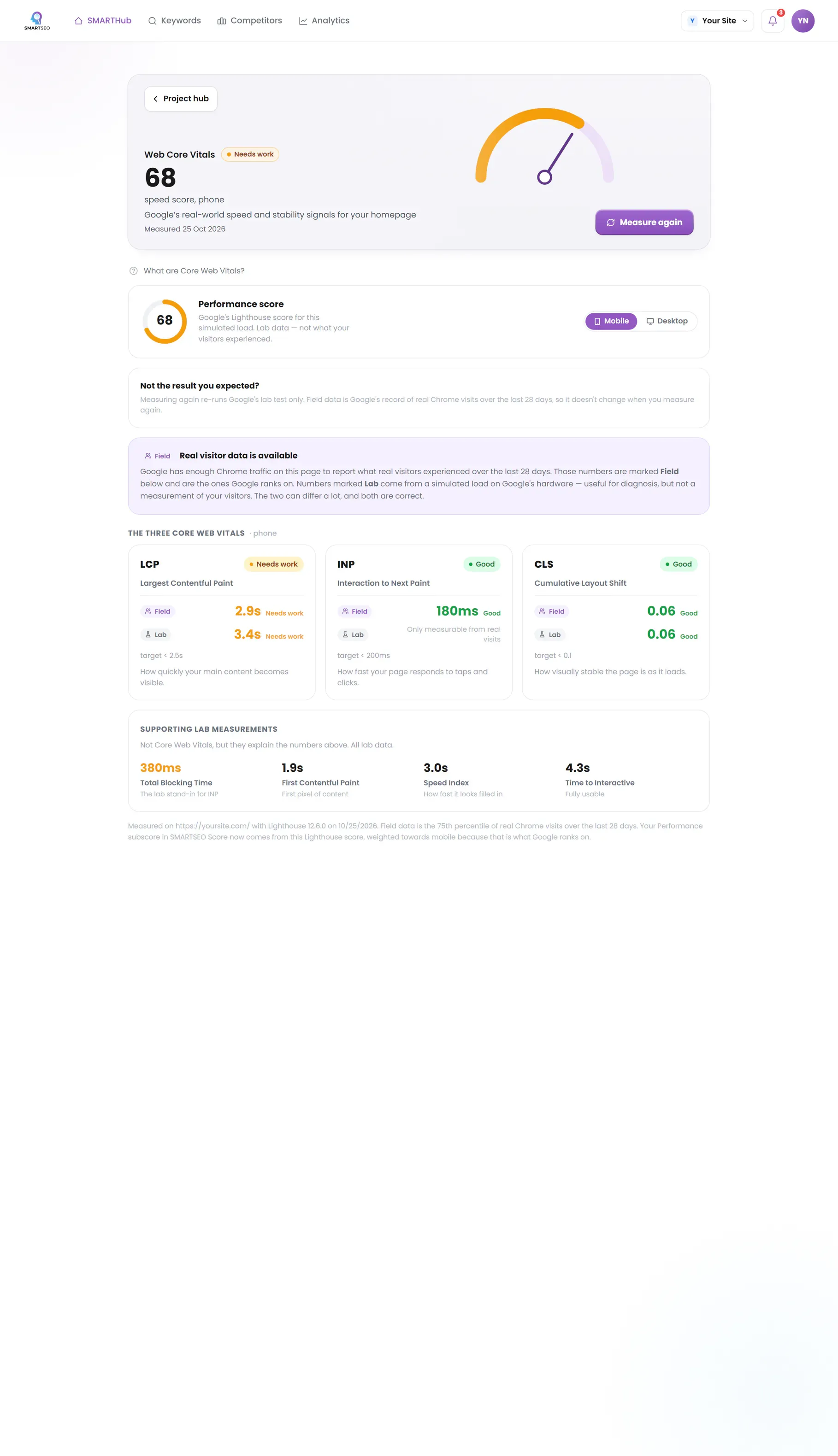
SMARTSEO measures your homepage’s speed and stability on mobile and desktop and keeps the lab test apart from Google’s real-visitor data. Its Keywords module shows search volume and where you already rank organically, so you can see which searches need an ad at all.
The problems we find most often
Each of these is a check SMARTSEO runs on every scan, in the words the app uses. Open one to see what triggers it and how to fix it.
WarningMain content appears slowly (LCP)
- What triggers it
- The main content of your homepage takes more than 4 seconds to appear on mobile (lab).
- Why it matters
- Largest Contentful Paint is how long the biggest thing on screen takes to show. Over 4 seconds is poor.
- How to fix it
- Speed up the largest image or text block: preload it, compress it, or serve it from a faster server.
WarningPage layout jumps while loading (CLS)
- What triggers it
- Your homepage’s layout shifts by more than 0.25 while it loads (lab).
- Why it matters
- Cumulative Layout Shift measures how much the page moves as it loads, the thing that puts a button under your thumb. Over 0.25 is poor.
- How to fix it
- Reserve space for images, ads and embeds before they load.
NoticeTemporary (302/307) redirects
- What triggers it
- A redirect uses 302 or 307, which tells Google the move is temporary.
- Why it matters
- A temporary redirect tells Google the old address will be back, so it may keep showing the old one in search. Fine if that is what you mean.
- How to fix it
- Use a permanent (301 or 308) redirect for pages that have moved for good.
WarningForm that sends data over http://
- What triggers it
- A form sends what people type to an http:// address.
- Why it matters
- A form on this secure page submits to an http:// address, so what people type travels unencrypted and the browser warns them first.
- How to fix it
- Change the form action to an https:// address.
A landing page, measured
Our own homepage shows why we test landing pages on a phone. On desktop it was quick; in Lighthouse's mobile test, with a slower phone and connection, the main content took several seconds to appear. Most ad clicks come from phones, and they arrive on the slow version.
SMARTSEO’s own project for its own site, read from stored data on October 28, 2026.
Questions people ask
What is a good cost per click?
There isn't one number: it depends entirely on the search and the market. The figure that matters is cost per customer. A $12 click that converts one in five is cheaper than a $2 click that never converts.
What is Quality Score?
Google's 1 to 10 rating of a keyword's expected click-through rate, ad relevance and landing page experience, compared with other advertisers. It is a diagnostic, not part of the auction itself, but the three things it measures do affect what you pay.
Which match type should I use?
Start with phrase and exact match on searches you know convert, with a solid negative keyword list. Add broad match once conversion tracking works, because broad match leans on Google's bidding, which needs conversion data to aim well.
How long before a PPC campaign works?
Ads show the day they're approved, but bidding needs a few weeks of conversions to settle. Judge a campaign on a month of data, not a day.
What we do for you
- Search campaigns structured around the searches that convert
- Negative keyword lists that stop paying for the wrong clicks
- Ad copy tested against your landing pages
- Landing pages that match the ad and load fast on a phone